
Badalucco
Art everywhere
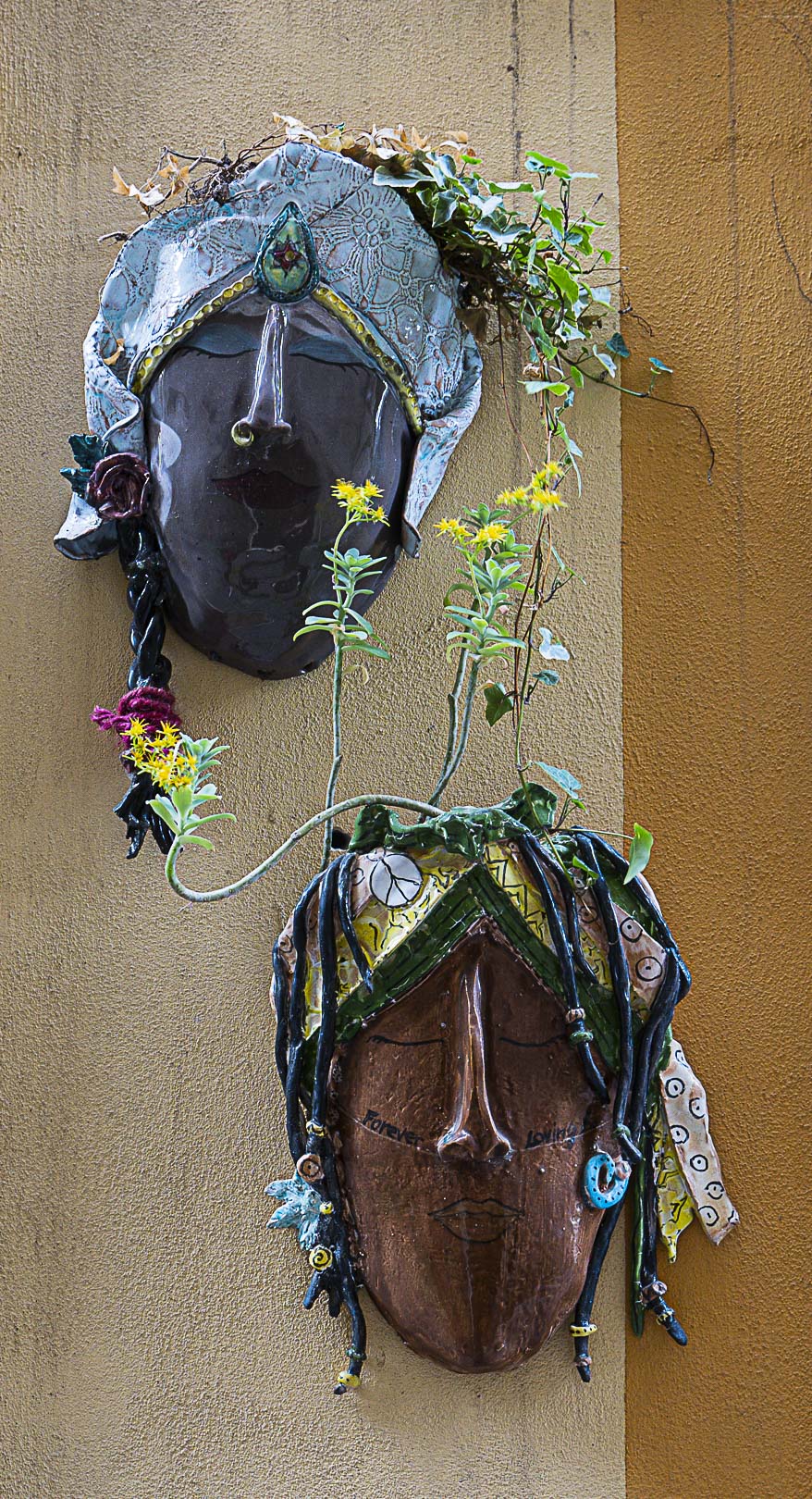
Badalucco is a “painted village”. Did you get lost in its steep, narrow streets? They’re called caruggiby the locals. Did you see the stone houses and ancient plasterwork? Did you notice there are frescoes and ceramic artworks on building walls? Badalucco has been embellished by these works since 1993, and are there for you and all visitors to see. Badalucco is unique, because it uses colours and shapes to tell the story of its traditions, its people, the olive harvest and the nearby mountains. Visionary art: would Mrs Crowfoot have liked it?
When she was here, the village was different: the same stones, but what else could she have seen?
🡪 map of places and triangles with explanations
She would definitely have passed through the town’s gates: Poggetto, Castello, Beo, Santa Lucia and San Rocco. The latter two had a religious, protective and defensive significance. Meanwhile, the Beo is the canal that brought water to the mills and olive presses.
So, enter the heart of the village. There is the main road where vehicles can pass, and two other streets running parallel to it. Walk on and you come to Piazza del Duomo and the parish church of Santa Maria e San Giorgio, the oratory of San Francesco and the town hall. The church is one of the earliest Christian sites of worship in the valley; it was a rural chapel with a license to baptise, before becoming a triumph of Baroque architecture between 1682 and 1691. The town hall is above the warehouses of the Confraria di Santo Spirito (Brotherhoold of he Holy Spirit), founded in the Middle Ages to help the poor. A little further on and Grace comes to the other oratory, Baroque in style, Madonna della Misericordia (Our Lady of Mercy). Then she takes a parallel back street. The houses close in around her; they seem to lean in as she passes, but they never fall down. Today this is Via Gioberti, home to what is thought to be the ancient seat of the Brotherhood, unchanged for 700 years. Grace looks around and sees other stone houses, very similar in style. She climbs the steep flights of steps; as she walks up the tall Baroque churches towers appear. At last she comes out into an open space. She has reached the ancient castle of the Ventimiglia family, all that’s left is a church, San Nicolò. She walks on, and leans over to see below the bridge of Santa Lucia, with the chapel and the town gate. There’s no definite date for the completion of the bridge; it’s been there since 1551.
Badalucco, the painted village