

Badalucco Museum
Entering the Tana Bertrand cave
G.M. Crowfoot Archaeological Museum
THE CAVE
Hidden among the mountains of Badalucco, the cave in the locality of Bertrand had been the subject of studies since the 19th century, mainly for the insect species living in it; it then became an archaeological site, thanks to an accidental discovery by Grace Mary Crowfoot. In 1906 the English naturalist found human remains dating back to the Copper Age inside the cave, leaving no doubt as to its use: the site, at an altitude of 800 metres on the western slope of Mount Faudo, was a burial chamber. To protect the site, documented by the Superintendency in 1934, and the forms of life it contains, access was limited to researchers only. But don’t despair, Grace Crowfoot herself will go with you to explore Tana Bertrand.
THE FINDS
I published a report on my discoveries in the article “Notes on excavations in aLigurian cave
”, in the magazine
“Man” in 1926, exactly 20 years after the initial excavations. Why so long, you may well ask. I wanted to return to Badalucco, carry out more digs and publish a more complete article, but life took me ever further away from Liguria. So I decided to write this (albeit partial) report in the knowledge that much more would be discovered by my fellow archaeologists. If you happen to read it, you’ll see my drawing of the cave. Can you imagine how dark and cramped it is?
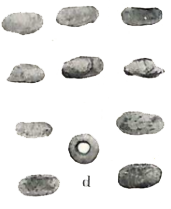
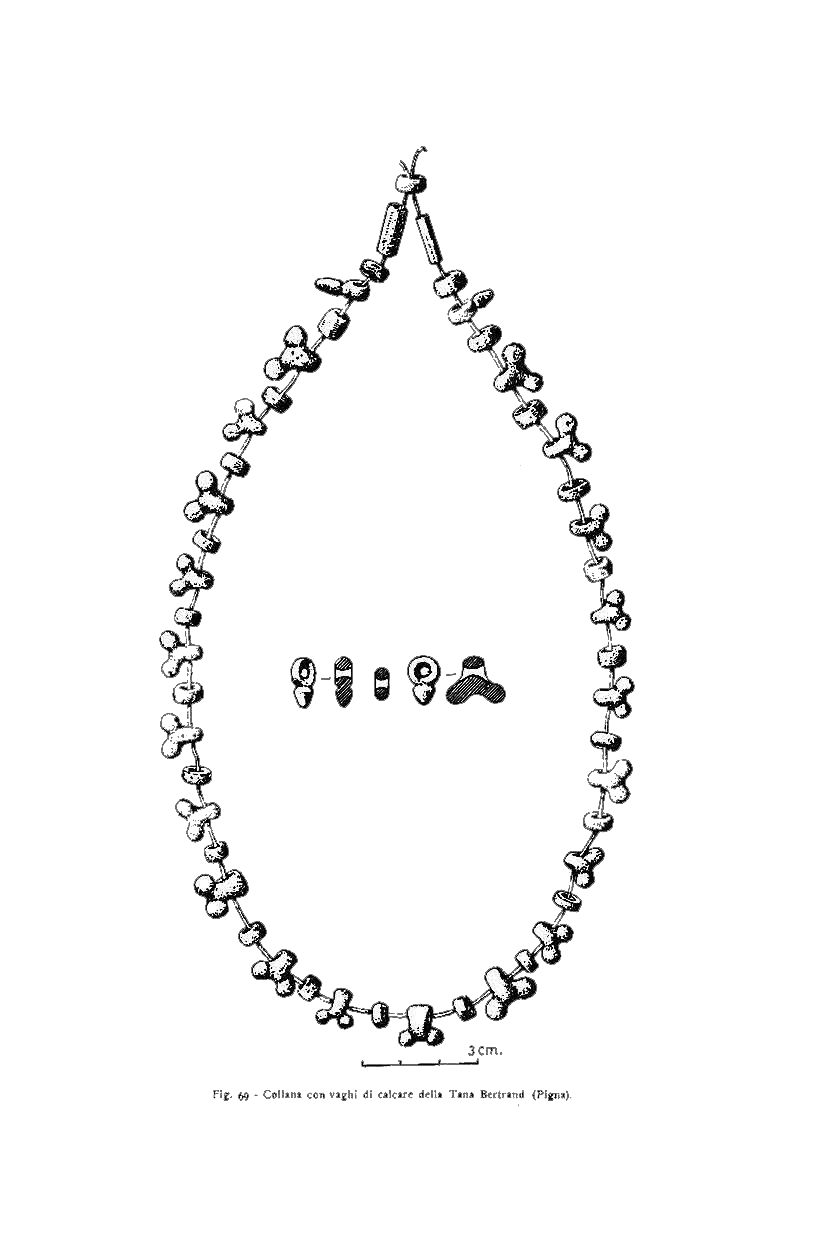
In her article for “Man” magazine, Grace Crowfoot describes what she found in Tana Bertrand between 1906 and 1909: flint arrowheads, a curved needle and bone pendants, spiral-shaped shells, animal remains, human bones – specifically humeri and skull fragments belonging to some 10 individuals – and approximately 300 hematite and soapstone beads in various shapes. Some of the latter are in necklaces that are special because of their alternating beads, some simple and others having protuberances, resembling fins, typical of the Copper Age in France and found here for the first time in Italy. This suggests the possible existence of relations and trade between the population of the Argentina valley and the south of France.
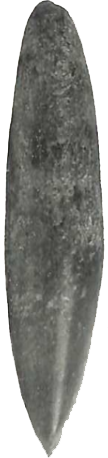
Subsequent research has revealed pendants carved in stone and the bones of wild boar, more beads and more human bones, bringing the number of individuals buried in the chamber to 12. The “Gentile excavations” unearthed stone slabs with simple designs, perhaps used to cover tombs, a small green stone axe, a stone arrowhead and a hair clip. The absence of ceramics, a typical indicator of a dwelling place, is significant.
All these discoveries confirmed Mary Grace Crowfoot’s hypothesis: Tana Bertrand was a burial place, and the objects found there are funeral accessories left for the dead. In subsequent centuries, the tombs were damaged and their contents mixed up; none have survived intact. A plausible hypothesis raised by Gentile is that the bones may have been moved to the sides of the cave to make room for further burials, but more information is likely to emerge: the most recent research, based on the writings and drawings of Angelo Saglietto, points to the possible reconstruction of the original position of at least one tomb.
Where are the finds preserved?
When I found the human remains in the Tana Bertrand cave, the leading museum in the Imperia province was the Bicknell Museum in Bordighera. It therefore felt natural to donate the human bones from the cave to that museum.
Since their discovery, the items from Tana Bertrand have been scattered far and wide. With no law to safeguard the national heritage, many items were taken to England by Crowfoot herself: two pearl necklaces made with soapstone and bones, several pendants and bone arrowheads. They remained in the family for a few decades, and after Crowfoot’s death were given to the Ashmolean Museum in Oxford, where her second daughter Joan worked. The items are still kept at the Oxford museum.
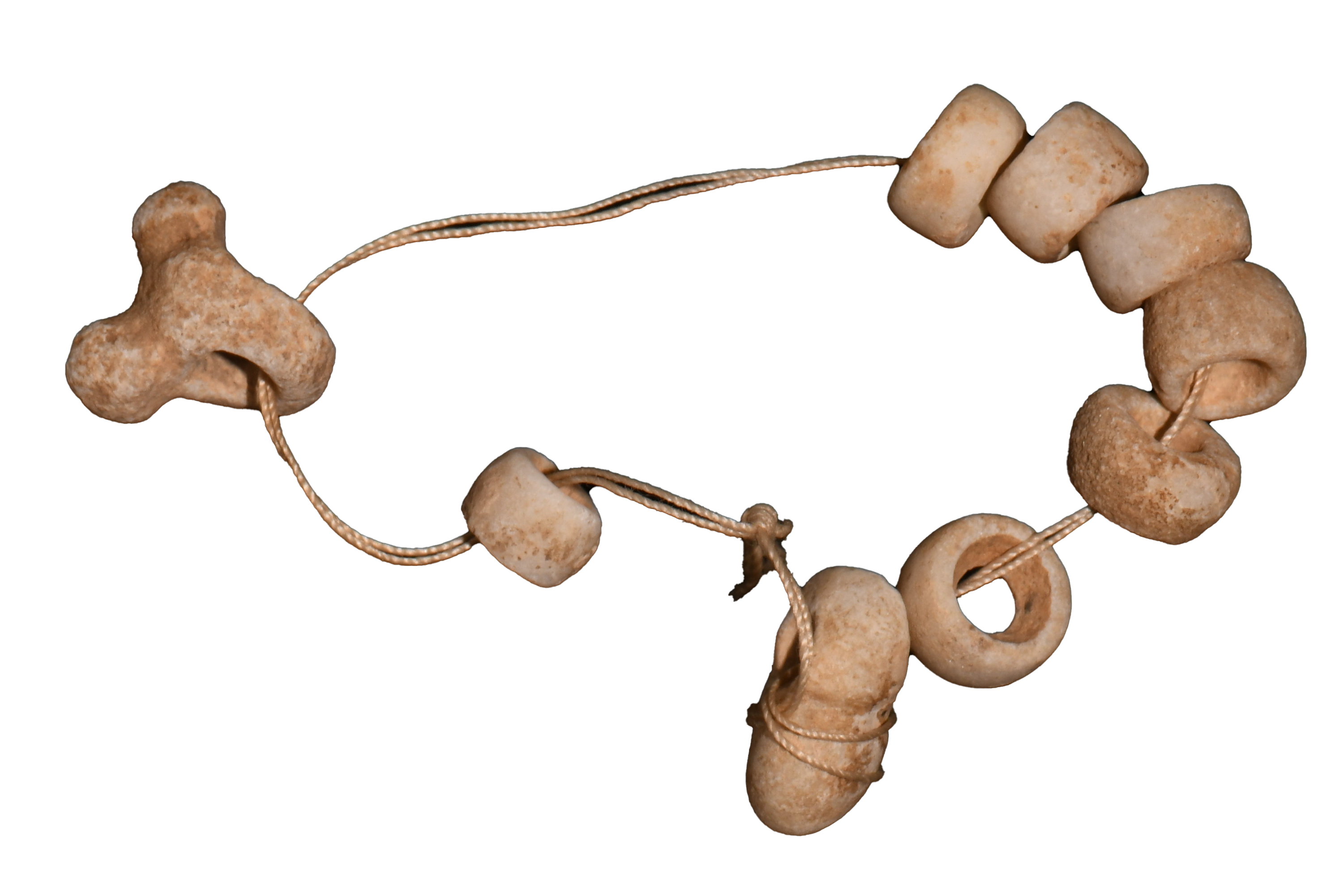
From Mary Crowfoot’s report, we know that the human remains she unearthed were given by her to the Bicknell Museum in Bordighera, along with a small necklace of finned beads made by Molly in 1948. Later on the Bicknell Museum loaned the entire collection to the Civic Museum in Sanremo, run by the International Institute for Ligurian Studies, where it remains on display to this day. Other beads, both plain and with fins, from the site, are part of the collection at Genoa University, while the most important necklace of finned beads is preserved in the Pigorini Museum in Rome, having been acquired in 1935 by its new director Pietro Barocelli.