

Grace Mary Crowfoot
A woman from the future
WHO was G.M. Crowfoot?
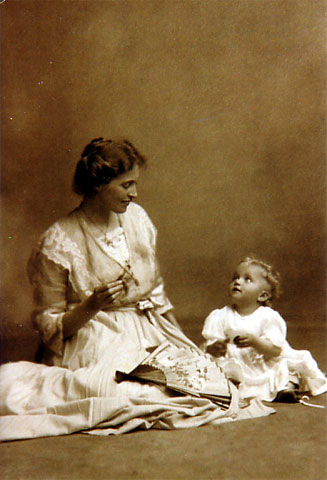
Grace Mary Hood, known as Molly to her friends, was born in 1877 in Nettleham, in the English county of Lincolnshire. The first of six children, she grew up in a religious family that encouraged a range of interests, from music to archaeology, a passion Molly shared with her grandfather, a collector of Egyptian antiquities. He put her in touch with the leading archaeologists of the time.
Molly and her sister Dolly were schooled at home, before completing their education in Paris, where they studied French, music and drawing, especially botanical sketches. Molly’s natural curiosity was heightened by her new experiences and, not content with superficial knowledge, she read deeply around every new subject. On her father’s death in 1897, she had the opportunity to study at Oxford, but was prevented from doing so by her mother, who did not see why a woman should continue studying.
It was her mother’s delicate health that led to a decisive turning point in her life: Molly and her family spent the winters at the family villa in Sanremo, they called it Lincolnia, after their county of origin. In Sanremo Molly frequented the local cultural association, and during an excursion with a group of naturalist friends she accidentally discovered human remains in the Tana Bertrand cave. She then became involved in the archaeological excavations of the cave, which continued in subsequent years. During this time Molly divided her time between Liguria and London, where she qualified as a midwife, despite her mother’s disapproval. Meanwhile, at a ball in 1908, she met her future husband, archaeologist John Winter Crowfoot: she instantly knew he was the only man she would ever want to marry.
In 1910 Mr and Mrs Crowfoot moved to Cairo, where John was appointed as an inspector for the Ministry of Education. Here Molly took up photography, and learned to use the camera to document her work. Indeed, in her first book Some Desert Flowersshe uses photographs to illustrate some specific characteristics of desert plants. During her life Grace Crowfoot published writings about all the topics that interested her, including an article about the Tana Bertrand cave.
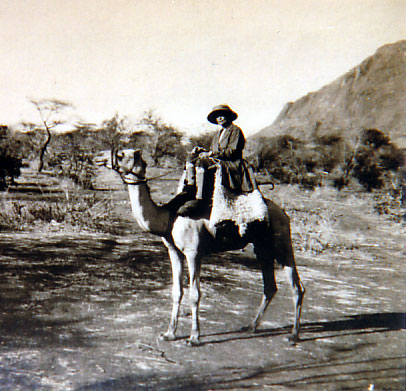
Grace followed her husband to Sudan in 1916 and Jerusalem in 1926; she helped him with his work, compiled excavation reports and organised research materials, sharing her enthusiasm with colleagues.
One of her interests, originating in England and continuing during her time in Egypt and Sudan, was textiles. Crowfoot studied traditional weaving techniques and their pictorial representations. In a combination of archaeology and anthropology, she managed to prove that the looms shown in scenes inside the pyramids are similar to those used on a daily basis in Sudan and Bedouin communities, and that the method of weaving has remained unchanged for centuries.

Emancipation for women
In her youth, Grace was also an active humanitarian, a supporter of Christian Socialism and of the fight for women’s rights, particularly in education. She was one of the first women to join the Labour party and the League of Nations.
Thanks to her training she opened Sudan’s first midwifery school, and with the help of two English colleagues she trained a generation of nurses to abandon the practice of female circumcision. During her stays in England, she taught the village girls to swim in the river, an activity previously reserved for boys.
At home too, Grace Crowfoot passed her passion and freedom on to her four daughters: Dorothy won the Nobel prize for chemistry in 1964, Joan worked at the Ashmolean Museum in Oxford, Elizabeth wrote a biography of her mother, and Diana followed her archaeologist husband to Canada.
Right up to her death in 1957, she retained a keen interest in archaeology and weaving.